|
As
seguintes palestras de convidados nacionais e internacionais estão
programadas para os eventos WebMedia, SBSC, WBPM, TIL e LA-WEB:
- "NeoVictorian
Computing, with a Twist", Simon Harper (WebMedia)
- "OWL-Dogmatism Considered Harmful: The Role of
Foundational Ontologies for The Semantic Web", Giancarlo Guizzardi
(WebMedia)
- "Election2008-USA: A Massively Multiplayer Game",
Clarence Ellis (SBSC)
- "Resource Lifecycle Management: BPM at work
in the social web", Fabio Casati (WBPM)
- "F-EXT: a framework for semantic facts extraction" Ruy Luiz Milidiu (TIL)
- "Past Searches Teach Everything:
Including the Future!", Fabrizio Silvestri (LA-Web)
- "Managing Linked Data on the Web: the
LinkedMDB Showcase", Mariano Consens (LA-Web)
- "Personal
Information Ecosystems: Design Concerns for Net-Enabled Devices",
Manuel
A. Pérez-Quiñones (LA-Web)
- "Introduction to Web Mining", Ricardo Baeza-Yates (LA-Web)
Essas palestras são
abertas a todos os participantes desses eventos.
Palestrante:
Simon Harper,
Human
Centred Web
Laboratory, Universidade de
Manchester (Reino Unido)
Título da Palestra: NeoVictorian
Computing, with a Twist.
Abstract
Experience
in World Wide Web (Web)
accessibility has taught us: to think about small bespoke solutions; to
tailor interaction and requirements to the user and job at hand; to
value high data interoperability; to realise that large enterprise
systems, become unmanageable and unable to change at the speed required
by both users and technology; and finally, to value heterogeneity.
Indeed, with the advent of Workflows, RPCs, RESTful services, and Cloud
Computing we can also see these viewpoints becoming more common in
mainstream thought. Here, we use Bernstein's concept of 'NeoVictorian
Computing' as a counterfoil to Andriole's new viewpoint of 21st century
software development. We extrapolate from the Web development model
into corporate and enterprise systems and propose a architecture of
client based heterogeneous applications each tailored to a specific
user, and their job, with highly interoperable data, controlled by
workflow's that are transferred with the data itself. We discount the
new client-computing fad, as this really means centrally controlled,
sometimes unavailable, old style enterprise systems. We suggest that by
moving toward user centred agile systems we follow the conceptual, if
not the technological, underpinnings of the Web. In this case we
realise that Web developers are in a privileged position to shape and
push forward this new kind of software architecture and the 'craft'
based approaches which will drive it.

|
Short Bio
Simon Harper is Research Lead of the Human Centred Web Laboratory in the School of Computer Science at the University of Manchester (UK). He is interested in how users interact with the Web and how the Web, through its design and technology, enables users to interact with it. He believes that by understanding disabled-users' interaction we enhance our understanding of all users operating in constrained modalities where the user is handicapped by both environment and technology. He sees fundamental research into users with disabilities as a natural preface to wide human factors research.
Simon is a founder of the W4A Conference on Web Accessibility (2004--2008). He was the Programme Chair for ACM ASSETS (2006), Submissions Chair for the WWW Conference (2006), General Chair for ACM Hypertext (2007) and ACM ASSETS (2008); he is also a member of the steering committee for these two conferences. He has guest edited the New Review of Hypermedia and Multimedia; Journal of Web Engineering; Journal of Disability and Rehabilitation, and Universal Access in the Information Society. He is also a recipient of the ADDW IBM Research prize and the ACM Douglas Engelbart prize.
|
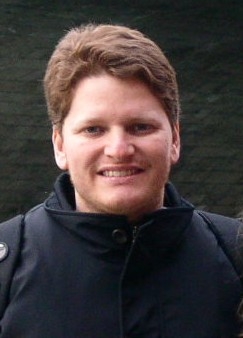
Palestrante: Giancarlo Guizzardi, Departamento de
Informática, Universidade Federal do Espírito Santo (UFES)
Título da Palestra: OWL-Dogmatism
Considered Harmful: The Role of Foundational Ontologies for The
Semantic Web
Abstract
Conceptual Modeling is a discipline of great
importance to several areas in Computer Science such as Domain and
Knowledge Engineering, Organizational Modeling, Information Systems
Design, Database Design, Knowledge Management, among many others. In
particular, what is termed a Domain Ontology in Computer Science is a
special type of Conceptual Model. In recent years, there has been a
growing interest in the development and use of domain ontologies,
strongly motivated by the Semantic Web initiative. However, as we argue
in this talk, an approach for ontology engineering uniquely based on
the modeling languages adopted in the Semantic Web (e.g., OWL, RDF) is
insufficient to address a number of representation and semantic
interoperability problems that arise in open and dynamic scenarios
(such as, for instance, the Semantic Web itself). In this talk, we
argue that these languages should be complemented by a language and
methodology based on a Foundational Ontology, i.e., a
domain-independent common-sense theory constructed by aggregating
suitable contributions from areas such as philosophical ontology and
logics, cognitive science and linguistics. Moreover, we discuss the
requirements for a theoretically well-founded modeling language which
are needed to meet the desiderata for a general conceptual modeling and
ontological representation language. Finally, we briefly present
advanced conceptual modeling techniques (such as design patterns and
methodological guidelines) based on principled ontological foundations
and show how they can be used to solve some classical and recurrent
conceptual modeling problems that (re)appear in concrete application
scenarios.
|
Short Bio
Giancarlo Guizzardi obtained a PhD degree (Cum Laude) from the
University of Twente, in The Netherlands. Since 2003 he has been a
Visiting Scientist, Research Collaborator and Associated Researcher at
the Laboratory for Applied Ontology (LOA), Institute for Cognitive
Science in Technology (ISTC), in Trento, Italy. He is currently a
member of the Computer Science Department at the Federal University of
Espírito Santo, in Vitória, Brazil, where he is one of the coordinators
of the Ontology and Conceptual Modeling Research Group (NEMO).
Giancarlo Guizzardi has been working for more than a decade in the
development of Domain and Foundational Ontologies and their application
in computer science and, primarily, in the area of Conceptual Modeling.
His experience in the area has also been acquired in a number of
academic and industrial projects in domains such as Software
Engineering, Oil and Gas, and Medical Informatics. He is one of the
initiators of the workshop series VORTE (Vocabularies, Ontologies and
Rules for The Enterprise), a satellite event of the IEEE EDOC
(Enterprise Computing) Conference and WOMSDE (Workshop on Ontologies
and Metamodels in Software and Data Engineering). He is the authors of
more than 60 papers in the subject of Ontologies published in journals,
book chapters, conference proceedings and a book, including the
best-paper award winning of the CAiSE'2004 conference. For the past
five years, he has been promoting the discipline of Ontology-Driven
Conceptual Modeling in different international scientific events and
graduate programs as a panelist, distinguished lecturer and keynote
speaker. Finally, he is currently a guest editor of journals such as
Applied Ontology (IOS Press), Information Systems (Elsevier), and the
International Journal of Business Process Integration and Management
(InderScience).
|
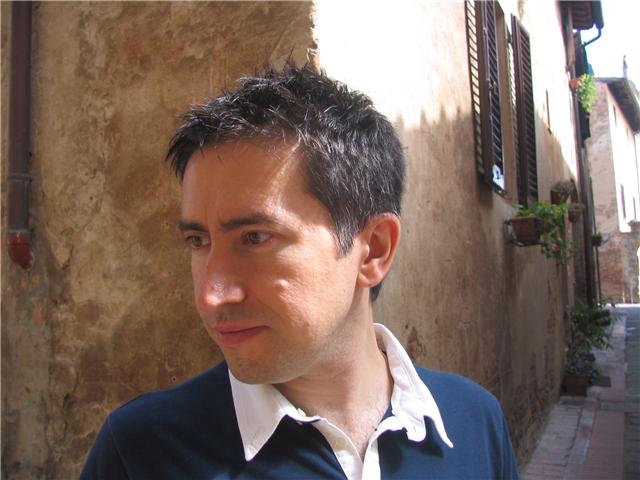
Palestrante:
Fabio
Casati, departamento de Ciência da Computação, Universidade
de Trento (Itália)
Título da Palestra: Resource
Lifecycle Management: BPM at work
in the social web.
Abstract
The social web is (also) about a web of
resources that are collaboratively managed, often in a fairly
unstructured fashion. Examples are wikis or google docs. The same
philosophy is spreading to "business resources", such as project
schedules and project deliverables, often shared and edited
collaboratively, though often with a little more structure. In open
source software development, in a way a precursor to Web 2.0, the
"software resources" are managed similarly. Some aspects common to all
these resources is that 1) they go through some lifecycle (which may or
may not be structured and defined); 2) even when defined, the lifecycle
varies frequently, and this variation is not an "exception", is normal
business life (just imagine defining a strict lifecycle for your
project deliverables and sticking to it 100%....); 3) humans are in
control: managing resources is not about automating the execution of
their lifecycle. I certainly would not want a BPM to manage my
activity of writing a paper. However, it is about being able to
initiate actions when needed (submission for review, testing of
software) and to monitor the status and history of a possibly large set
of resources that I am managing (e.g., a set of deliverables for my
project).
In this talk I will present a resource lifecycle management system that
can manage anything that can be referred to by a URI, that can be used
by any skilled web user even without programming skills. It's key
aspects are the simplicity of the model, the embracing of the inherent
"unstructuredness" of the life of (Web) resources, the ability to
monitor status and history of all managed resources, the ability to
make changes easily on the fly, and the balance between human and
automated control. In particular, in the RLM system, the "workflow
engine" are in fact the humans managing the resources, initiating
automated actions if and when needed. The approach is inspired in part
by BPM systems and in part by the philosophy of the Web.The RLM system
will be hosted and available for use by anybody who wants to model the
lifecycle of any resource, to automate certain (resource-specific)
actions (e.g., submission for review), and to observe the evolution of
a set of resources of interest. The applications are countless, but
examples include project deliverables (which typically vaguely follow a
lifecycle based on a project quality plan), collaborative editing on
wikis, writing of code and documentation, or composing, arranging, and
recording a song.
.
|
Short Bio
Fabio Casati is professor of computer science at the University of
Trento. He recently joined the University of Trento after 7 years in
Hewlett-Packard USA, where he was technical lead for the research
program on business process intelligence. Fabio has also contributed
(as architect and data modeller) to the development of several HP
commercial products and solutions in the area of web services and
business process management. He is co-author of a book on Web services,
member of the editorial board of ACM TWEB, and member of the steering
committee of the international conferences on Service-Oriented
Computing and Business Process Management. |
Palestrante: Ruy Luiz Milidiu, Departamento de Informática, Pontifícia Universidade Católica RJ (PUC-RJ)
Título da Palestra: F-EXT: a framework for semantic facts extraction.
Abstract
The application of Machine-learning techniques to fact extraction has been reported since the formalization of the Template Element Task at the Message Understanding Conference (MUC-6, MUC-7) and Automatic Content Extraction meetings (NIST, 2000). This talk reports on several applications of the F-EXT Framework. F-EXT provides the basic architecture and functionality for the design and implementation of machine learning based Fact Extractors. We consider Fact extraction a variety of semantic extraction applications like named relation extraction and semantic role labelling. F-EXT is also used as a basic machine learning tool for text preprocessing tasks, that are key to the construction of more advanced tasks like accurate relation extractors. The main component of F-EXT relies on its core machine learning engines which are Hidden Markov Models, Support Vector Machines, Decision Trees, Transformation Based Learning and Entropy Guided Transformation Learning. We report on the application of F-EXT to develop several NLP preprocessors: Portuguese POS tagger, English noun phrase chunker, English text chunker, Portuguese noun phrase chunker, Hindi text chunker and Portuguese named entity recognizer. We also report on the application of F-EXT to design and implement the following four relation extractors: Person-Affiliation, Person-Quotation, Portuguese Person-Appositive and predicate-arguments. F-EXT offers a straightforward usability that enables low effort fact extractors construction. Its advanced machine learning algorithms allow the construction of state-of-the-art competitive natural language processing tools.
|
Short Bio
Received his Ph.D. degree in operations research from the University of California, Berkeley. He is currently an Associate Professor in the Informatics Department at the Pontifícia Universidade Católica do Rio de Janeiro, Brazil, where he also coordinates the LEARN Lab. His research interests are in algorithm engineering and machine learning. He is currently working on designing algorithms and building frameworks for data intensive Machine Learning applications. The envisaged application domains are Computational Linguistics and Automatic Trading. |
Palestrante:
Clarence Ellis,
Collaboration Technology Research Group, Universidade do Colorado (EUA)
Título da Palestra: Election2008-USA: A Massively Multiplayer Game
Abstract
This talk will begin with a bit of social commentary on the current ongoing US presidential election process. This will lead into presentation of a proposed new election process called Humane Rational Democracy that can be implemented in a staged fashion through the use of social networking and massively multiplayer Internet games. We argue that the time and technology are right for this experiment. An overview of the process, the games, and the selection process for electors will be presented, with time allocated to discussion, questions, and opinions.
|
Short Bio
Dr. Clarence A. Ellis is a Professor of Computer Science, and Director of the Collaboration Technology Research Group at the University of Colorado at Boulder. At Colorado, he is a member of the Systems Software Lab, and the Institute for Cognitive Science. During 1991, he was chief architect of the FlowPath workflow product of Bull S.A. Previously he was the head of the Groupware Research Group within the Software Technology Program at MCC. For the decade prior to joining MCC, he was a research scientist at Xerox Palo Alto Research Center.
Clarence (Skip) Ellis is on the editorial board of numerous journals, and has been an active instigator and leader of a number of computer associations and functions. He has been a member of the National Science Foundation Computer Science Advisory Board; of the University of Singapore ISS International Advisory Board; of the NSF Computer Science Education Committee; and chairman of the ACM Special Interest Group on Office Information Systems (SIGOIS). His interests include groupware, coordination theory, object oriented systems, CSCW, office systems, databases, distributed systems, software engineering, world-wide-web (internetworking), systems design and modeling, workflow systems, and humane interfaces to computers. Mr. Ellis has also worked as a researcher and developer at Bell Telephone Laboratories, IBM, Xerox, Microelectronics and Computer Technology Corporation, Los Alamos Scientific Labs, and Argonne National Lab. His academic experience includes teaching at Stanford University, the University of Texas, MIT, Stevens Institute of Technology, and in Taiwan under an AFIPS overseas teaching fellowship. He has published several books, and over 100 technical papers and reports, lectured in more than a dozen countries, and was an invited speaker on object oriented systems at the most recent IFIP World Computer Conference.
|
Palestrante: Fabrizio Silvestri, CNR (Itália)
Título da Palestra: Past Searches Teach Everything: Including the Future!
Abstract
"History Teaches Everything, Including the
Future" wrote Alphonse de Lamartine in the nineteen century. Even if
history cannot be really considered a predictive science, historical
information can successfully be used in many fields. In this talk
I will discuss Web Search Engines and their Query logs, which contain
historical information about past usage of such systems. Query Logs are
nowadays considered as one of the most important sources of knowledge
that is routinely exploited to improve performance in terms of both
effectiveness and efficiency of Web Search Engines. The techniques I am
going to review are mainly focused on enhancing efficiency of
real-world distributed search systems. I will present some of the most
interesting results obtained in the last five years by us at the High
Performance Computing Laboratory in Pisa in collaboration with research
labs Worldwide. I will start by showing state-of-the-art caching
techniques for search results and posting lists and ways to optimally
combine them. Next, I will show applications of data mining techniques
aimed to speed-up the processing of queries in both document-based, and
term-based distributed search engines. I will conclude by presenting
two new results. One is related to caching in similarity-based
multimedia search systems. The latter is about caching for efficient
snippet generation on a distributed repository of documents.
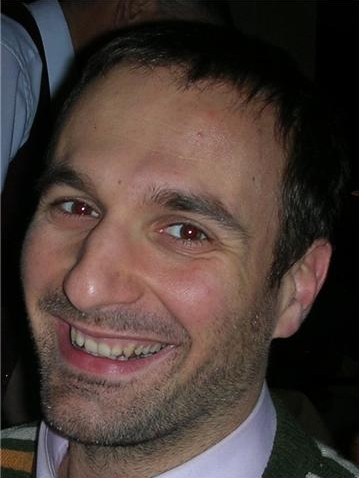
|
Short Bio
Fabrizio Silvestri is currently a Researcher at ISTI - CNR in Pisa. He
received his Ph.D. from the Computer Science Department of the
University of Pisa in 2004. His research interests are mainly focused
on Web Information Retrieval with particular focus on Efficiency
related problems like caching, collection partitioning, distributed IR
in general. In his professional activities Fabrizio Silvestri is member
of the Program committee of many of the most important conferences in
IR as well as organizer and, currently, member of the steering
committee, of the workshop Large Scale and Distributed Systems for
Information Retrieval (LSDS-IR).
|
Palestrante:
Mariano Consens,
Information Engineering, MIE and CS, Universidade de Toronto (Canadá)
Título da Palestra: Managing Linked
Data on the Web: the LinkedMDB Showcase
Abstract
The Linking Open Data community project is
extending the Web by encouraging the creation of interlinks (RDF links
between data items from different datasets identified using
dereferenceable URIs). This emerging web of linked data is closely
intertwined with the existing web, since structured data items can be
embedded into web documents (e.g., RDFa or microformat encoded data),
and RDF links can reference classic web pages. Abundant linked data
justifies extending the capabilities of web browsers and search
engines, and enables new usage scenarios, novel applications and
sophisticated mashups.
This promising direction for publishing data on the web brings forward
a number of challenges. While existing data management techniques can
be leveraged to address the challenges, there are unique aspects to
managing web scale interlinking. In this presentation, we describe two
specific challenges; achieving and managing dense interlinking, and
describing data, metadata, and interlinking within and among linked web
datasets. Approaches to solve these challenges are showcased in the
context of LinkedMDB, the first open linked dataset for movies.
LinkedMDB has a large number of interlinks (over a quarter of a
million) to other open linked datasets, as well as RDF links to
movie-related webpages.
|
Short Bio
Mariano Consens research interests are in the areas of Data Management
and the Web, with a focus on linked data, XML searching, analytics for
semistructured data, and autonomic systems. He has over 40
publications, including journal publications selected from best
conference papers and several patents and patent applications. Mariano
received his PhD and MSc degrees in Computer Science from the
University of Toronto. He also holds a Computer Systems Engineer degree
from the Universidad de la Republica, Uruguay.
Consens has been a faculty member in Information Engineering at the MIE
Department, University of Toronto, since 2003. Before that, he was
research faculty at the School of Computer Science, University of
Waterloo, from 1994 to 1999. In addition, he has been active in the
software industry as a founder and CTO of a couple of software startups
and is currently a Visiting Scientist at the IBM Center for Advanced
Studies in Toronto. |
Palestrante: Manuel A. Pérez-Quiñones, Center for
Human-Computer Interaction, Departamento de Ciência da Computação,
Virginia Tech (USA)
Título da Palestra: Personal
Information Ecosystems: Design Concerns for Net-Enabled Devices
Abstract
Today, with the proliferation of affordable
computing, people use multiple devices to fulfill their information
needs. However, designers approach each device platform individually,
without accounting for the other devices that users may also use. In
many cases, the applications on all the user's devices are designed to
be functional replicates of each other, often with an emphasis on
keeping their form and function consistent with one another. We argue
that this emphasis on recreating consistent clones on each platform
should not be the dominant concern for designers. In this presentation,
we present the idea of a personal information ecosystem, an analogy to
biological ecosystems, which allows us to discuss the
inter-relationships among users devices to fulfill their information
needs. Using the examples of now ubiquitous web technologies on
different platforms, we discuss how considering the user's ecosystem of
devices as a whole as a design target lends to better user experience
and encourages designers to tackle the more important concern of
seamless task migration across devices.
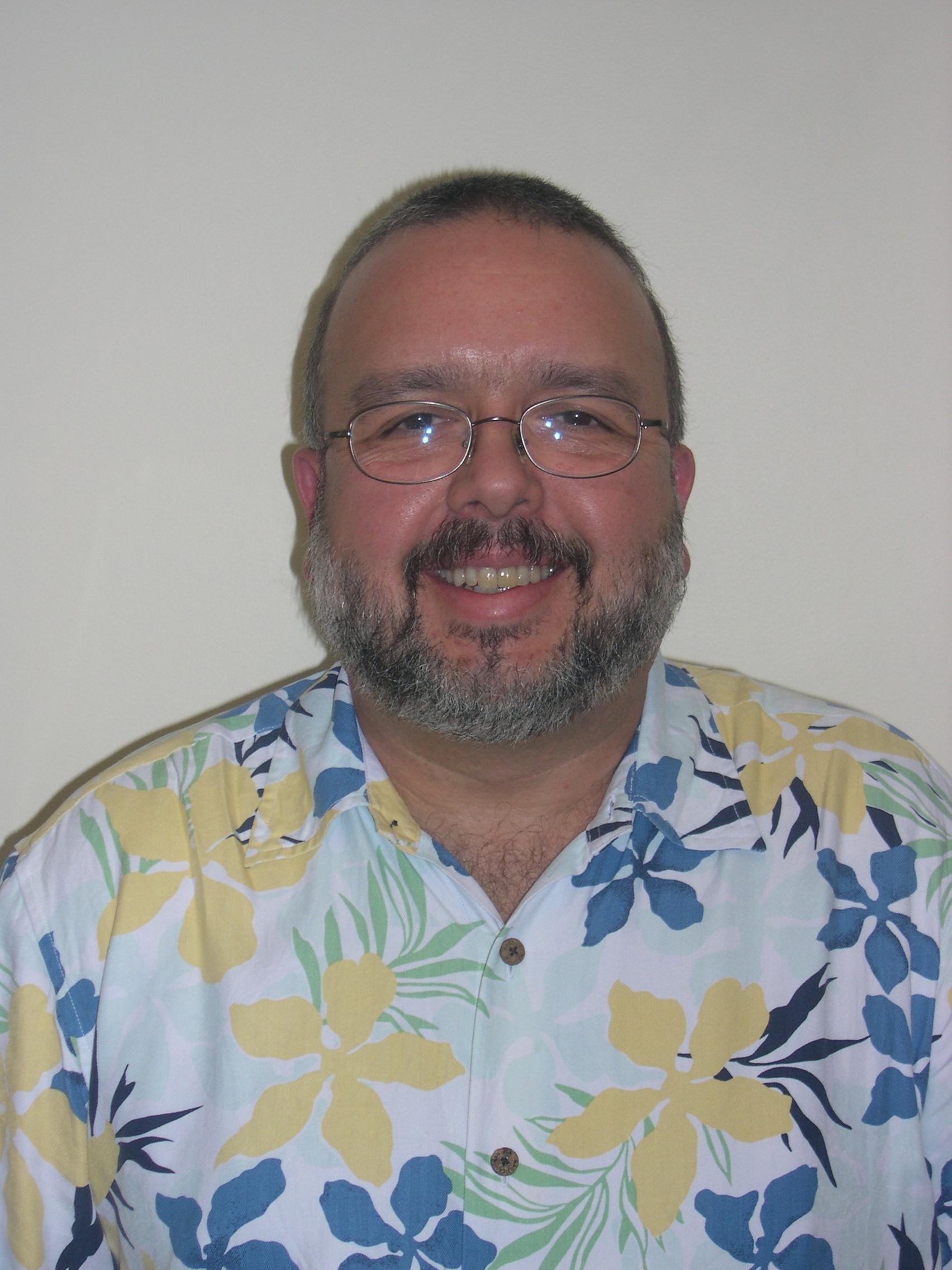
|
Short Bio
Manuel A. Pérez-Quiñones is Associate Dean in Residence and Director of
the Office for Diversity Programs at the Graduate School, and an
Associate Professor in the Department of Computer Science at Virginia
Polytechnic Institute and State University. Pérez-Quiñones holds a DSc.
in Computer Science from The George Washington University. His research
interests include human-computer interaction, personal information
management, user interface software, digital government, and
educational uses of computers. He is an NSF CAREER awardee, and for
2008-2010 has been included in the IEEE Computer Society Distinguished
Visitor program. He is a member of the Coalition to Diversify
Computing, where he co-directs the national program Collaborative
Research Experience for Undergraduates in Computer Science and
Engineering. He serves on the editorial board for the Journal on
Educational Resources in Computing. |
Palestrante: Demi Getschko, CGI.br
Título da Palestra: Internet, conceitos de governança e tendências atuais
Abstract
- Conceitos básicos que regem a colaboração na Internet
- Governança histórica dos recursos centrais, IAB, IANA, IESG, IETF
- Mudanças no final do anos 90: ICANN
- Cúpula de Túnis, WSIS, WGIG e IGF (Atenas e Rio de Janeiro)
- Nomes de Domínio. ccTLDs, gTLDs, IDN
- A transição para inclusão do IPv6
- O CGI, o registro brasileiro, DNSSEC
|
Short Bio
Demi Getschko has been involved in international networking since 1987 and was part of the team that created the first Internet connection from Brazil. He has been a member of the Brazilian Internet Steering Committee since 1995 and has served as administrative contact for .br since 1989. He played a critical role in the definition of the Brazilian DNS tree and in defining the rules that govern the Brazilian registry.
From 1971 through 1986, Dr. Getschko held a variety of positions within the University of Sao Paulo, from student to faculty to IT Professional. From 1986 through 1996 he was the manager of the Fapesp Data Center, a state foundation that played a central role in the Brazilian academic network. Between 2000 and 2001 he joined iG (Internet Group), a free Internet provider in Brazil, as Chief Technology Officer and Vice-President of Technology.
In 1996, Dr. Getschko became Technology Director at Agencia Estado, an arm of a major Brazilian newspaper, where he is involved in strategic planning, focusing on the technological evolution affecting the information industry.
He holds B.S., M.S., and Ph.D. degrees in Electronic Engineering from the University of Sao Paulo in Brazil.
Demi was selected for the ICANN Board by the Country Code Names Supporting organisation in 2005. He is currently serving his second term, which will expire six months after the end of the 2008 annual meeting. |
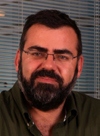
Palestrante: : Ricardo Baeza-Yates, VP of Yahoo! Research
Título do Tutorial: Introduction to Web Mining
Part I: 28/10, 14:00 - 16:00
Part II: 29/10, 18:00 - 19:00
Abstract
The Web continues to grow and evolve very fast, changing our daily lives. This activity represents the collaborative work of the millions of institutions and people that contribute content to the Web as well as the one billion people that use it. In this ocean of hyperlinked data there is explicit and implicit information and knowledge. Web Mining is the task of analyzing this data and extracting information and knowledge for many different purposes. The data comes in three main flavors: content (text, images, etc.), structure (hyperlinks) and usage (navigation, queries, etc.), implying different techniques such as text, graph or sequence mining. Each case reflects the wisdom of some group of people that can be used to make the Web better. For example, user generated tags in Web 2.0 sites. In this talk we walk through the mining process and show several applications, ranging from Web site design to search engines.
|
Short Bio
Ricardo Baeza Yates es Ph.D. en Computer Science (Univ. of Waterloo, Canadá, 1989), Magister en Ing. Eléctrica (1986) y Cs. de la Computación (1985) de la Univ. de Chile; e Ingeniero Civil Eléctrico de la misma universidad. Actualmente es vicepresidente de Yahoo! Research para Europa & Latinoamérica, basado actualmente en Barcelona. Sus áreas de investigación son recuperación de información, minería de la Web, algoritmos y visualización de información. Es co-autor de un libro en recuperación de informción (Addison-Wesley, 1999), de un manual de referencia en algoritmos y estructuras de datos (Addison-Wesley, 1991) y co-editor de un libro en recuperación de la información (Prentice-Hall, 1992). Ha sido dos veces presidente de la Sociedad Chilena de Ciencia de la Computación y ha recibido premios de la Organización de Estados Americanos y el Instituto de Ingenieros de Chile. También recientemente fue presidente del CLEI (Centro Latinoamericano de Estudios en Informática), miembro del directorio de IEEE-CS y coordinador internacional del subprograma de informática y electrónica aplicadas de CYTED (Programa de Cooperación Iberoamericano). Durante el año 2000 comenzó un "spin-off" de Internet para buscar en la Web Chilena (www.todocl.cl). En 2002 fundó en Chile el Centro de Investigación de la Web (www.ciw.cl), del cual fue su primer director, y fue la primera persona de su área científica en ser incorporada a la Academia de Ciencias de Chile en 2003. En el 2007 obtuvo la medalla J.W. Graham de la Univ. de Waterloo que se otorga a ex-alumnos por innovación en computación. |
|